TRY FREE!
Try ADL Today! ADL is free and available in public preview preview
The quickest path is to install a starter solution from the Marketplace, run the generator, and see real output land in your repository within minutes.
Roelant Vos
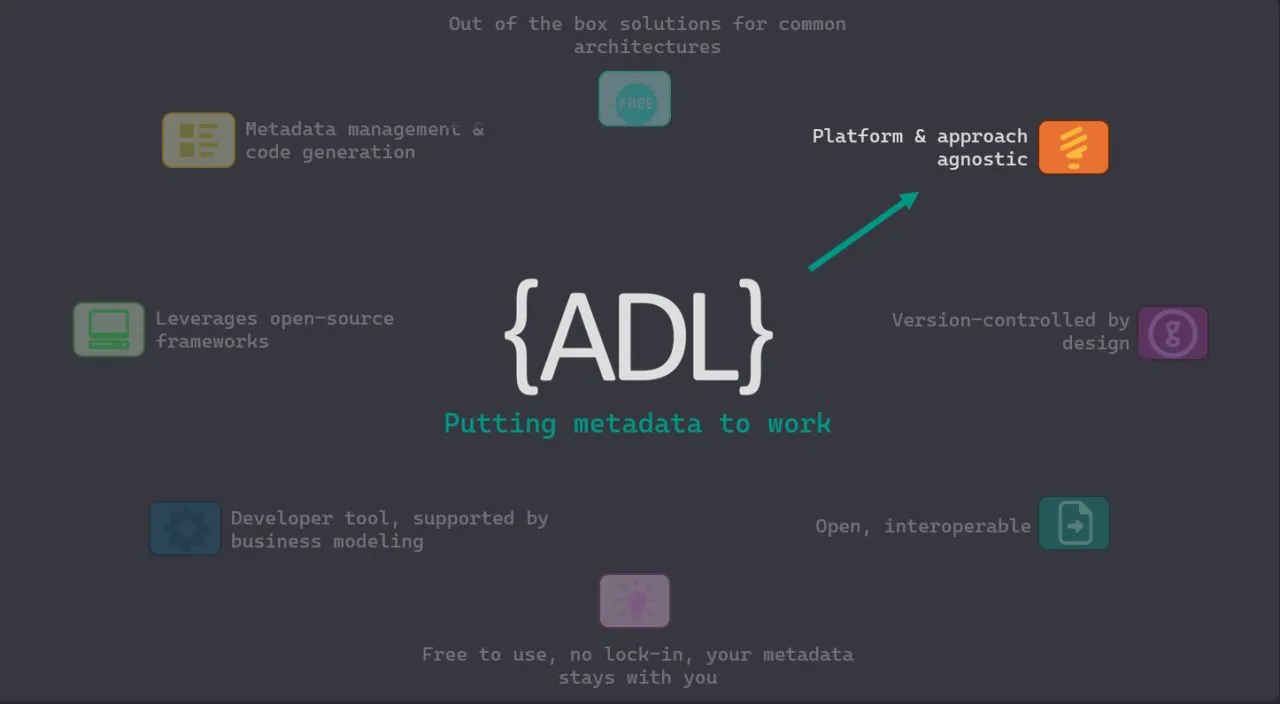
At the core of Agnostic Data Labs is a simple principle: your design choices should not be constrained by a tool’s default opinion. That is what we mean by platform- and methodology-agnostic — the value behind the name.
Across metadata platforms, data warehouse automation tools, and code generation frameworks, we have seen the same pattern: teams move quickly at first, then hit limitations when implementation details no longer fit the prescribed way of working.
Not being able to make a solution work the way you need it to is one of our pet peeves, and ADL is built to avoid that trade-off.
The core model separates design from implementation:
Because those concerns are separated, you can change generation behavior without rebuilding your modeling approach. This applies to DDL and DML structure, naming conventions, deployment patterns, and even the target language itself. Templates can be tweaked directly in a preview screen so you can validate results before they touch your environment.
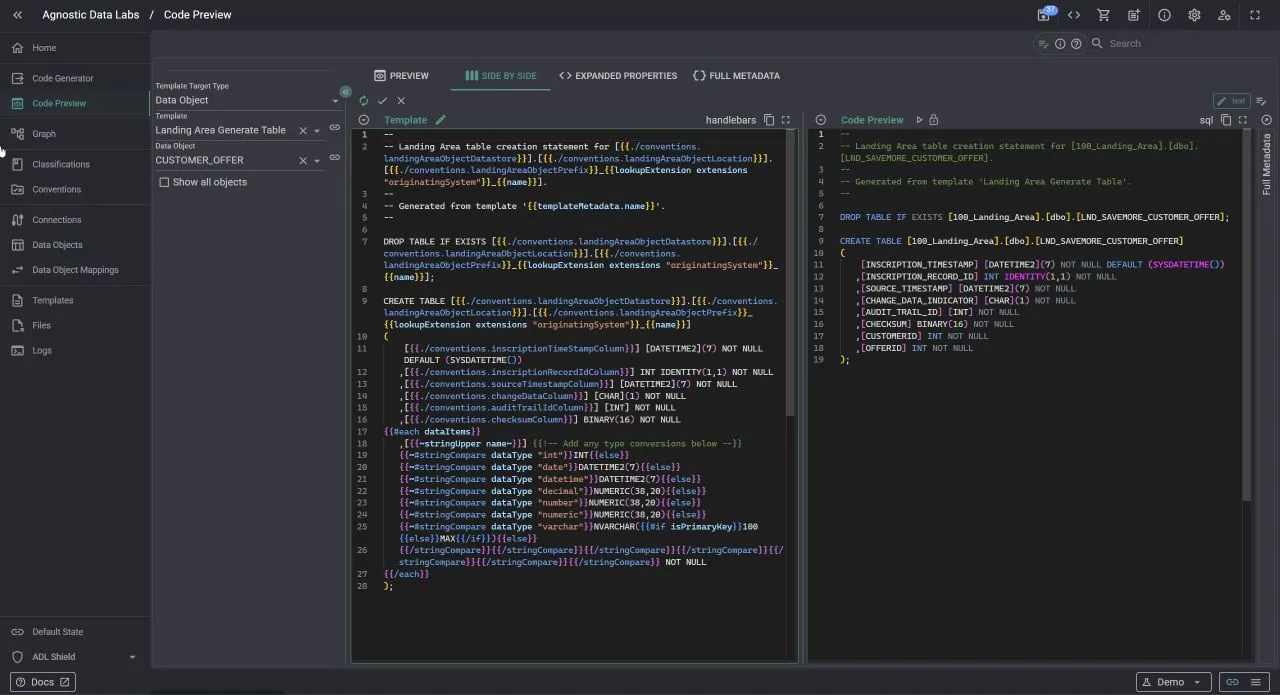
There is a trade-off to acknowledge. Highly opinionated software often feels easier at first because it provides strict guidance: it works a certain way and you conform to it. A more flexible approach gives you control, but it can feel daunting when you have to shape your own rules from scratch.
That is why ADL ships with starter solutions: ready-to-use approaches across common methodologies (Data Vault, 3NF, Kimball) and target technologies. They give you structure without locking you in — you can start with proven foundations and evolve the details to match your own standards over time.
The result is a delivery model that supports both speed and autonomy.
Start working with ADL today at https://app.agnosticdatalabs.com. It’s free, and improving every day.
The quickest path is to install a starter solution from the Marketplace, run the generator, and see real output land in your repository within minutes.